Showing posts with label soda tax. Show all posts

Friday, May 6, 2011

We Have a Drinking Problem


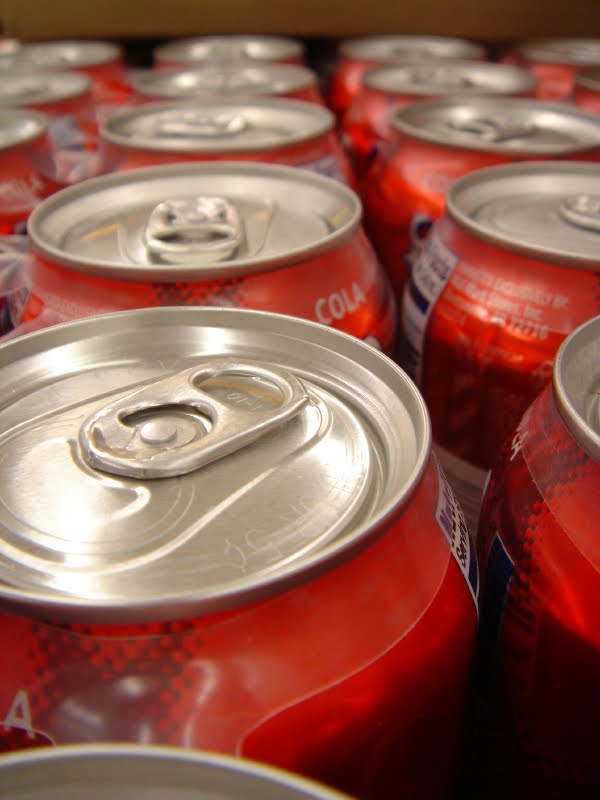
You love it, or you don’t. You drink it, or you don’t. The “it” is Coca-Cola and on May 8 it will be 125 years old. The company has evolved from one product—Coca-Cola, to more than 400 brands in 2006. It sells more than 1.3 billion drinks a day in more than 200 countries around the world.

That’s a lot of coke . . . and a lot of calories.

Soda (in all fairness, not just Coke) is the single largest contributor of calories in the U.S. diet. A 12-oz can of sweetened soda contains about 150 calories and almost 10 teaspoons of sugar. Drink just one can a day and you’ll pile on an extra 15 pounds in a single year (the average American drinks about 2 cans of soda a day). Liquid calories now account for a whopping 21 percent of our daily calorie intake—more than 400 calories every day.

Sugar sweetened drinks (including fruit drinks) have been linked to a number of contributing factors to chronic illness, including metabolic syndrome and higher blood pressure. Ten percent of overweight adults consume 450 calories of sugar sweetened beverages a day (cutting those 450 calories per day could lead to a weight loss of close to 50 pounds in one year.)

But, back to Coca-Cola. Way back when, 125 years ago, we didn’t have an obesity epidemic. Today, 34 percent of our population over the age of 20 is obese, and another 34 percent is overweight but not obese. One in three American children and teens is overweight or obese (a threefold increase over the past 30 years). And, believe it or not, this is Coca-Cola’s target market.

In the current issue of Advertising Age, Coke’s chief marketing officer notes that “teen recruitment” will be especially important to grow the business. CEO Muhtar Kent says, “we are laser-focused on targeting the right consumers, and creating new strategies that are winning over a massive new generation of teens to drive growth of Trademark Coca-Cola.”

Given our efforts to curb childhood obesity and the obesity epidemic in general, do you see a disconnect here? How exactly should we celebrate this 125th anniversary?

Tuesday, May 4, 2010

Mice, Phosphates, Aging – and More


If you were a mouse, you might have reason to worry. You might find reason to worry even if you’re not a mouse.

Here’s why . . .

In a word: Phosphates. New research published in the Federation of American Societies for Experimental Biology finds that high levels of phosphates create toxic effects and accelerate signs of aging—in mice. They may also increase the number and severity of aging-related complications such as cardiovascular disease, chronic kidney disease and muscle and skin atrophy. And where do you find phosphates? Sodas, processed foods—and even diet soft drinks. In other words, what many of us consider our ‘daily staples.’

Now, it’s true that phosphorous is an essential mineral for human and animal life. It is fundamental to growth, maintenance, and repair of all body tissues and is necessary (along with calcium and magnesium) for proper growth and formation of bones. In addition, the body utilizes phosphorus in protein synthesis, carbohydrate metabolism, enzyme activation and as a component of nucleotides and nucleic acids (DNA and RNA). Maybe that’s “too much information,” but, too much phosphorous, such as the phosphates found in soda, can actually leech calcium from bone, leading to bone weakness and osteoporosis. And, yes, diet soda contains phosphates.

A 2008 study found a correlation between consuming diet soda and Metabolic Syndrome, a collection of risk factors for cardiovascular disease and diabetes that include abdominal obesity, high cholesterol and blood glucose levels, and elevated blood pressure. The risk for metabolic syndrome was 34 percent higher among those who drank one can of diet soda a day, compared with those who drank none. A 2005 study from the University of Texas Health Science Center in San Antonio, presenting eight years of research data, found for each can of diet soft drink consumed a day, a person’s risk of obesity went up 41 percent.

As for foods high in added phosphates, a few of the more common culprits include: ice cream, skim milk powder (often added to processed foods), biscuits, cookies and cakes from the supermarket, ketchup, mayonnaise, frozen and breaded fish, processed cheese, frozen pizza, hot dogs, and processed or deli meats. And, toothpaste. And, this is not a comprehensive list. Look for foods that list mineral salts, emulsifiers and lecithin as ingredients—and avoid them.

Phosphates occur naturally in many healthy foods, such as nuts, whole grains, legumes, brown rice, milk, and some leafy greens. And, as we pointed out, our bodies need phosphates. But do we need all the added phosphates in processed foods? Do we need the diet soda and associated risks? It’s not like we don’t have choices . . . right?

Thursday, September 10, 2009

All That Sugar . . . All Those Soft Drinks . . . All That Money!


In a Blog Post (To Tax or Not to Tax—That’s a Big Question) dated June 1, 2009, we started with the following statement and questions:

Liquids make up about 22 percent of our daily calories. A study published in “Circulation: Journal of the American Heart Association,” found those who drank just one soft drink a day—diet or regular—showed increased risk factors for heart disease. Here’s more: Women who drink two or more cans of diet or regular soda a day are nearly twice as likely to show signs of early kidney disease. And, any soda may increase your risk of metabolic syndrome. People who consumed just one diet soda daily had a 34 percent higher risk.

A 12-ounce can of sweetened soda contains 150 calories and 10 teaspoons of sugar. Is this tax-worthy? It’s a question we may be looking at. Here’s a question to go with it—Do we impose a “sin” tax on regular soda but not diet soda? And, if we’re in essence taxing sugar—what about candy, gum, ice cream, candy bars, pies, cake? (You get the picture.)

Now, here’s what’s new and eye-popping. Let’s look only at sugar-sweetened beverages—the numbers only grow from there. The Yale University Rudd Center for Food Policy and Obesity has gone further than asking thoughtful questions. The Center has developed a “Revenue Calculator” for soft drink tax revenue. The figures are truly amazing. Just a 1 cent tax per ounce on sugar-sweetened beverages (regular soft drinks, sports drinks, flavored water, fruit beverages, energy drinks, ready-to-drink coffee and ready-to-drink nondiet tea) in 2010 could result in tax revenues of $14,887,530,097 on the 11,630,882,889 gallons of the sweet stuff we drink. In one year.


Here in Texas alone, those figures translate to $1,187,823,885 on the 927,987,410 sugar- sweetened gallons of beverage we Texans consume. It’s pretty obvious that taxes on sugar-laden beverages can result in a great deal of revenue for cities, states and the nation.

Suddenly those Big Gulps really do have value. One more question—what do we do with it?